 No More. It Ends Here.
This notice proposes Industrial Action.
Keep hurting the system
till we (the KrustyLads) advise you not to.
We want:
To Reign In AHPRA’s excesses.
Setup to investigate complaints against AHPRA and related entities.
Reset CME/PD Activities and Protocols,, Accreditation Standards,, and Medical Record Standards.
More appropriate and “open” fees for Doctor Registration,, doctors approaching Retirement,, . . . . . . Doctors working Part-Time,, Indemnity Insurance.
-
Control of Medical Workforce (AHPRA/Medical Boards) by democratically elected representatives with experience in their profession.
-
All Medical Records judgments against doctors working in Accredited Practices to be quashed.
-
As a corollary, any doctor convicted of an offence without a patient complaint as witness to the offence, to be given leave to apply to have the offence quashed - at AHPRA expense. Expenses and compensation to be paid.
We have 3 stages in our Agenda for Action. ( 4 stages if you want to take an active part).
The existing system heavily depends on the good-will and devotion to duty of medical professionals, in an environment where there is denial of basic legal rights and access to justice for these medical professionals.
This fact is the Achilles heel of the Administration of Medicos by AHPRA/ Medical Boards. We can choose not to give them our good will and cooperation. For most Australians, this process is known as Unionism - an activity lacking in the medical industry today.
Unions
The stages:
- Do the Survey online: preferably.
Go direct to survey
Vote by circling or marking your choices on the AHPRA Survey Notice.
The web site has an automatic send feature you can use.
To make your voice heard, send your reply to ALL of : - the AMA (Australian Medical Association),
- RACGP ( or other relevant professional body) and to
- Us. ( the KrustyLads).
This gives direction, credibility and impetus to these players to inveigle changes into the medical system.
(Details of contact numbers/ emails are on this site: GUVNOT.COM ).
To emphasize again what to do, to initiate the change process,
send your reply to - ALL of us.
To drive change, we ALL need to know that you want change.
Resend this
WE would also ask you to REPEAT the send-out process in FOUR MONTHS,
and then again at FOUR MONTHS.
Keep the issue on the boil.
Don't let every think its a flash in the pan that can be forgotten.
- To create force for change , we need to create a scenario where it is important to listen to us. Look at the site GUVNOT.COM and pick a strategy that will hurt the system - and that does not hurt you, at the same time.
As a famous general once said, “You don’t win a war by dying/ suffering for your country. You need to make the other poor dumb bastard die / suffer for his country”.
In short, do things that hurt the system and push it towards collapse. Don’t do things that hurt you or push you towards collapse. Hurt them, and they will listen. Hurt yourself and you can be safely ignored, even laughed at.
change 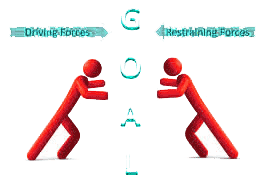
The GUVNOT.COM site details a number of strategies that you can pick to support our campaign and hurt the system. You don’t need to tell anyone else what or how you are doing it. No one need ever know. And you can change your strategy from time to time, just to make it less obvious. (see GUVNOT.COM/2 ).
That’s why our fax/email says I believe other doctors should support these proposals.”.
Support us, but you can do this invisibly, without risk, laughing all the way to the bank.
There is nothing in any of our public face that proves that you - the individual – are doing anything other than going about business as usual.
You can visit the GUVNOT.COM site: at GUVNOT.COM/1 ( the Fax agenda discussion) or GUVNOT.COM/2 (how to take action).
for further information and discussion points about each of these proposals,
to explore Industrial Action strategies that suit your practice , beliefs and circumstances,
to read some background information about the difficulties we face,
-
to send a message or information or your details to Us.
unions
We suggest you revisit GUVNOT.COM every few months at least. You need to remind yourself what you can do. You need to periodically rethink what you can do. You need to do something to help us all to succeed.
- We need to make sure that no-one hijacks the agenda. So please agree to keep on doing what you’ve chosen to do until you get a fax/ email from US, and
the GUVNOT.COM site gives notice that a reconciliation has been reached- - - as possible.
Keep hurting the system
till we (the KrustyLads) advise you not to.
- A number of the Medical Organisations have fallen into bed with government for only a promise, so let’s agree not to let it happen again.
Organisations that have become so dependent on government largess that they need to consider the effect their actions have on their silent partner, at every turn. (As a process, it's called regulatory capture).
Allied Health and Nursing
Although this site predominantly focuses on Medical Doctors, aspects of this Industrial action are relevant to Nurses and other Allied Health Workers.
You can use the same form to feedback to your own professional group, to ride along with the wave of changes we are proposing. After all, perhaps some of our proposed changes are relevant to you as well. AHPRA/ the Boards are a menace to everyone, not just doctors.
If they are doing these things to doctors, we can assume that everyone is getting the same treatment.
Lastly, we can’t fix everything for everyone.
WE all have very specific needs and ideas on what needs to be done.
That’s why the AMA or RACGP are so often stifled in action.
They can’t please all the members , so end up doing nothing to avoid upsetting anyone, especially their big silent financially supportive partner.
- The site BLOODWEAVER.COM bypasses this tendency to the bland, by creating a mechanism for small groups of people to work together and make changes in the world.
The site BLOODWEAVER.COM is there to let groups of people coalesce around new ideas, gather people and financial support and undertake specific actions as your group sees fit, legally.
Get 5 or 6 of you together with an agenda, (the Bloods)
agree to pool time and money and resources, ( weave your actions together)
And you can undertake your own initiatives.
The Government may be huge, but not as large as the people who live within its embrace. It cannot fight every group to the bitter end to enforce its agenda. That is the beauty of democracy in the electronic age. It allows people widely separated in time and space to work together for the common good- on a whole range of issues, not just our medical ones.
- If you have specific needs or agendas, The site BLOODWEAVER.COM is there to let you choose an issue and to work for change with the support of groups of like-minded people.
groupwork 
GUVNOT.COM/2/2 Summarises how to take action.
Everyone is stuck on earning more money by seeing more patients. But you can do quite well seeing smaller patient numbers as well.
Yes you can do well seeing 6 patients per hour, but many doctors more realistically can only function at 5 patients per hour at most. But consider that if you work at seeing 3 patients @ 20 min each you can earn the same amount of money as someone seeing 5 patients per hour.
The real loser is the doctor who sees 4 patients approximately per hour.
Do the maths.
So the sensible choice is seeing 3 patients per hour and have an easy life OR
see 5-6 patients per hour, get lots of people upset as you try to keep to time and cause yourself lots of stress.
The system depends on all the Type A personality doctors out there pushing themselves to see lots off patients ( and consequently earning AHPRA’s ire). So make life easy for yourself and create a system wide backlog of patients to stuff the system up. You can earn just as much, have an easy life and avoid the patient’s ire by doing relaxed consultations.
If you want to stuff the system up, pick your own times to do long consult days. You can work a mixture of 6 patients per hour on some days and 3 patients per hour on other days.

Blackboard 3
blackboard 5 
Draw your own conclusions about how hard you want to work and how you can exploit the situation. Slowing down may earn you more.
If you don’t count the incentive payment of $20.65, you earn more money doing three long consults per hour than 5 short ones.
As a general Note : you are a fool if you are doing 13–20-minute consults. You are really costing yourself money.
Now, years ago, the HIC used to assume everyone work at 10–15-minute appointments and would investigate anyone seeing more than 10% consultations as longs.
But the world has changed.
Computer timing PROVES the consult lasted 20 minutes.
Lots more doctors are working slower because they don’t own their own surgeries and don’t need to push the envelope of high volume to make end meet, especially the new generations of part- timers.
Medicare/HIC recently removed the requirement for long consults to be Complex: the key determinant is time ONLY.
- My guess today is that 30% to 50% of consultations fall in the 20min plus bracket: i.e. they are long consults.
Choose a strategy that works for you and creates stress on the system. And you can change your bookings day to day- you don’t have to choose just one single strategy: just choose something that works for you and stresses the system.
Working too hard
And you earn that same amount whether you take your time doing a 20 minute consult or get pushed madly around by patient demands. Remember, our goal is to hurt the system. And you can do it by NOT working too hard. We have a lot of strategies on CONS10.COM about controlling your time and your consultation. Go SLOW hurts the system a lot because the system is built on the exploitation of Type A personalities so prevalent in the medical industry- something exacerbated by our training and life / work experience.
The CONS10.com site is designed to teach those doctors working high volume
how to maximise their gain and reduce their time- stress ,
if working 5-6*10-minute consultations.
The key message is to do one thing at a time only and NEVER any more- for your own sake. Doing more leads to future consults being longer and doing more and you not getting paid.
And if you want to really push the envelope of high volume, AI really makes it look like you are working hard. It is amazing the volume of notes it generates. You may never need to worry about AHPRA telling you, that your notes are inadequate.
Time
appointments 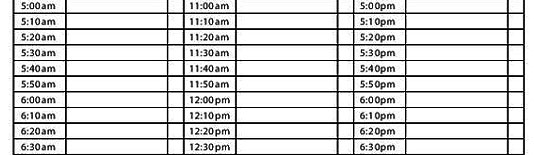
One very critical issue is to retain the idea of a difference between private cons and public consultations. You need to sell a different product to each market.
You need to make sure that you always treat public / BB patients differently to private / paying patients.
This is an active process. You need to actively decide how you are going to differentiate these two products. Otherwise there is no point in having private patients. The co-payment for BB consultation makes it essential to work out how you differentiate the two products to allow you to TREAT and BILL them differently.
Other Ways to stuff up the system:
Recall
AHPRA and the system demands doctors follow up every result. Print two copies of every pathology or Xray referral and ring every person about results/ ring people who have not had tests done and ask them to do their test as ordered by you, the doctor.
More aggressively, keep no copies of results and ring every person as every batch of results turns up.
Or give results a few days to turn up then ring – and ring every time for every abnormal result.
Work Part time:
taking days off: preferable critical days : same as everyone else in your region : e.g. all take Friday afternoon off.
Vs
Work only long consultations on Friday finish early.
Referrals:
Send people to the wrong doctor: after all the patient knows better and
you should take their opinion into account.Send to the wrong specialist
Send to the wrong public clinic
All changes of address for the specialist are a phone consult.
All hospital re-referrals are another consult.
Refer things that are going to cost you money : dressings and fractures/ plasters. ( The fracture referral is an interesting one. The rebate is so low, ( and includes aftercare), that GPs have defaulted to NOT treating any fractures at all. Every one is sent to the public hospital). Many practices no longer even stock plaster and plaster . Serves the government right. If you want a service, no one is going to do the job for nothing. So what are you going to pay . It has to be something that covers the time and effort of doing it-or else no one will do it.
Hence the present government created situation for patient treatment of fractures.
Refer easily and for nuisance complaints. WE have a case presented at one of our meetings. A mother and child were referred to a hospital clinic where one of our members was working. After a goodly and considered consultation, He rang the referring GP as to why they were there. The answer. They were not easy to obtain the relevant information from. So the GP decided quickly that a referral to Hospital Outpatients would be the easiest and quickest way to deal with the matter.
It shows how much the system relies on the goodwill of doctors. Shifting the work load onto the public hospital system severely stresses the ability of the system to deliver care. Most GPs do lots to help people and their health, And this is not something to be taken for granted.
MedReferral
Refer early with a letter rather than use the computerised referral systems- especially to local public hospitals.
Or Patients
need to reattend to give time to do the referral.
(We had a case recently whereby a patient told one of our members that they needed to get a travel vaccine. The doctor made them make a separate appointment for the travel consult - - separate to the first attendance, then made them return for a separate appointment booked with the nurse – while the doctor “supervised” the giving of the vaccine). i.e. That's three consults not the shortcut that many of us may take.
There are people out there who are quite militaristic in forcing patients to do what benefits them most. And sadly, if you don’t and you do own a practice, your own survival can be at stake. So we have a lot of sympathy for doctors forced to practice in this fashion.
It shows how much the system relies on the goodwill of doctors. And this is not something to be taken for granted.
Hospital referrals : keep referring as much as possible, anything difficult or uneconomic and make sure you see every patient with every activity relating to every referral – so you get paid for what you are doing.
Mental Health: doctors are getting in trouble for trying to save people’s lives by treating them. Refer off everything. Do not treat mental health patients. If a patient is refused , have a form letter for complaint to hospital, news media, administrative authorities. The system either includes GPs or can be forced to deal with the miserly cost savings measures they have instituted themselves. ALL by themselves.
Limit appointment activities. Remember ,you do not have to kill yourself working. Take your time. If there is not enough time , then another appointment is required. Do one thing per consultation - bulk billed consultation that is. ( Can you count to "one" doctor).
Pathology
Think less about the costs of tests and just do whatever you think it needs. Don’t worry about B12/ Folate/ Urine MCS . The government wants patients to pay for them, so let them pay for them. The patients should know that the government is doing this on their own behalf. Put up some posters in the surgery explain what the government has done.
Every request from pathology for an explanation as to why the test can be justified to be bulk billed, should be a patient phone consult- so you can get paid for your time involved in the government scheme of saving money by reducing services.
OR
For pathology : do only a maximum of three tests at a time , since this is all the government is paying for. His makes it easier to follow up EVERY result, since when three results are in the pathology buffer then you know that all the tests out of a single episode are back.
Or follow the expensive road. The government decided a few years ago that it would save money for steroid injections in joints by knocking off the GP rebate. Send the patients to Xray for their injections with a cost to the system of several hundred dollars vs the $20 they used to pay to GPs.
Certificates :
Give more not less. You are not a care-taker of social security or an employment enforcer. Give people time off if they want it and give lots of it.
You can also require a phone appointment if the certificate needs to be altered as the patient is not allowed back to work.
It shows how much the system relies on the goodwill of doctors. And this is not something to be taken for granted.
Keep hurting the system
till we (the KrustyLads) advise you not to.
ProtonMail Links:
Contact Links:
-
Send your Survey response
Return Faxout Survey / Email survey sheet

- Do the Survey online: preferably.
Go direct to survey
Help Us Covertly
-
Give Us Contact Emails/Phone/Fax

for Media Employees : TV, Radio, Magazines, Journalists
-
Tell us about problems you have experienced that may be able to be used to charge AHPRA. We especially want to know about any deaths that AHPRA may be responsible for.

-
I have an issue I want to talk about.
Help Us Overtly
-
I want to volunteer to be on any committee

investigating AHPRA/ acting against AHPRA.
( send your CV).
-
I want to volunteer to help other doctors with difficulties - by writing supporting statements, by commenting on cases, by testifying about an issue.
General
-
I work in an AHPRA administered allied health industry. I would like to give you some suggestions to put on your site relevant to these industries.
(Please have any proposal written to a cut and paste standard –
to make it easy for us to use).
-
I have some good ideas to put on our website - about anything e.g.
about actions to take to cause the system harm.
about things that should be brought to light.
(Please have any proposal written to a cut and paste standard – to make it easy for us to use.).
Keep in Touch - Or Not
-
Put my details on your database, so you can contact me.
-
Unsubscribe

- See Guvnot/2/2
See Guvnot/Actions
See Guvnot/1/16 -
ContactUs.html
Keep hurting the system
till we (the KrustyLads) advise you not to. - Don't let everything we do be seen as a flash in the pan : soon to be forgotten.
THE AHPRA POINT OF VIEW:
On proposals for industrial action against the regulatory system
From AHPRA’s perspective, proposals framed as “industrial action” against the regulatory system misunderstand both the role of the National Scheme and the consequences of deliberately stressing service delivery pathways. AHPRA and the National Boards are not employers, and regulatory functions are not labour conditions. The Scheme exists to protect the public by setting minimum standards for registration, conduct, records, accreditation linkages, and continuing professional development. These standards are created under law, reviewed through statutory processes, and subject to parliamentary oversight.
Calls to “hurt the system” in order to force regulatory change risk collateral harm to patients who depend on timely access to care. The system being stressed is not an abstract bureaucracy; it is the clinical pipeline that patients rely on for referrals, continuity, and treatment. AHPRA’s position is that deliberately creating backlogs, delaying care, or manipulating access pathways undermines public trust in the profession and may expose practitioners to ethical and legal risk. The regulator’s mandate requires it to consider community impact, not only practitioner dissatisfaction.
AHPRA recognises that many doctors feel regulatory burden acutely and that compliance requirements can feel disconnected from frontline realities. However, systemic reform is not achieved by destabilising service delivery but by engaging with lawful review mechanisms, statutory consultations, professional submissions, and judicial oversight where regulatory decisions are contested. The National Scheme is periodically reviewed precisely to ensure proportionality, relevance, and effectiveness. Structural change occurs through legislation and policy reform, not through pressure that risks being interpreted as resistance to oversight itself.
Proposals to weaken regulatory enforcement or to reframe compliance as optional in the name of protest also create a risk of uneven standards across jurisdictions and practices. The public interest depends on consistent minimum expectations, regardless of practice setting or billing model. AHPRA’s concern is that industrial signalling aimed at regulators may be misread by the community as withdrawal from professional responsibility rather than a critique of administrative design.
Where doctors believe regulatory processes are unjust, excessive, or misaligned with clinical reality, AHPRA maintains that the appropriate response is targeted reform through democratic processes. The regulator’s independence from factional pressure is not hostility to the profession; it is a core safeguard intended to ensure that public protection does not become negotiable.
Erasmus (the old dog) : Call It As I See It
1. On Proper Channels
AHPRA says: “Use the proper channels.”
Yes — the proper channels.
The place where complaints go in,
and silence comes out.
When every “independent” pathway leads back into the same machine,
and every door says OVERSIGHT but none of them open —
people will build their own door.
2. On Compliance
Doctors are not leaving because they hate standards.
They are leaving because they are sick of being treated like suspects.
If you measure doctors by their forms,
you eventually get doctors
who practise filling in forms.
And then everyone stands around admiring the paperwork
while the workforce quietly does less and less clinical work / more and more paperwork.
That is not safety.
That is paperwork wearing a halo.
3. On Patient Care
The real harm is not just to doctors.
It is to patients.
Doctors stop going the extra mile
when they know that if something goes wrong,
or if someone complains later,
they may be accused of professional misconduct anyway.
The patient getting better is no defence -
so don't do anything remotely non-routine.
So the system quietly trains doctors to think:
do less,
say less,
risk less,
help less,
document more.
And then calls that public protection.
4. On Independent Oversight
AHPRA likes to speak the language of independence.
That depends what you mean by independent.
Independent of doctors? Often yes.
Independent of scrutiny? Suspiciously often yes.
Independent of consequences? Far too often.
When an institution keeps examining itself, excusing itself,
and emerging yet again convinced of its own virtue —
that is not oversight.
That is institutional self-delusion.
Or, put more simply:
“We looked into ourselves very carefully and discovered we are wonderful.”
That is not judgement or insight.
That is a mirror with a self-advertisement banner pasted on top.
5. On Public Harm
AHPRA and its defenders talk as if all this is done
for the common good.
That phrase wears thin
when the common good keeps looking like human wreckage.
If a system helps drive doctors out,
helps break doctors under investigation,
removes clinicians from high-risk areas of care,
and leaves vulnerable patients suddenly without treatment or continuity —
then the harm is not theoretical.
It is immediate.
It is human.
It is deadly.
You cannot remove doctors from difficult fields,
from addiction medicine,
from methadone care,
from high-risk patient groups,
and then act surprised when chaos follows:
more untreated addiction,
more destabilised patients,
more crime,
more emergency presentations,
more avoidable deaths.
And then, after all that,
to stand back and call it public safety
or the common good —
that takes a very special kind of bureaucratic imagination.
A system that destroys doctors, abandons vulnerable patients,
and then congratulates itself for being principled
is not protecting the public.
It is self-delusion pretending to be virtue.
They are fooling themselves,
but real people get hurt.